For most visitors to Kenya, the game drive is the starting point. A 4WD Land Cruiser with a pop-up roof, a guide who knows the reserve, and the ability to move across vast terrain in a single morning: this is the vehicle safari format, and it delivers exactly what it promises. Wide coverage, close encounters with large animals, and reliable access to wildlife regardless of conditions.
A second format exists alongside the game drive, one that operates on entirely different terms. A walking safari places you on the ground in the bush, moving at the pace of the landscape. The two formats are not interchangeable. They reveal different things, serve different interests, and operate under different rules.
This guide compares walking safari vs vehicle safari across the dimensions that matter most for trip planning: wildlife access, safety, physical demands, where each is available, and who each format suits.
What a Vehicle Safari Involves
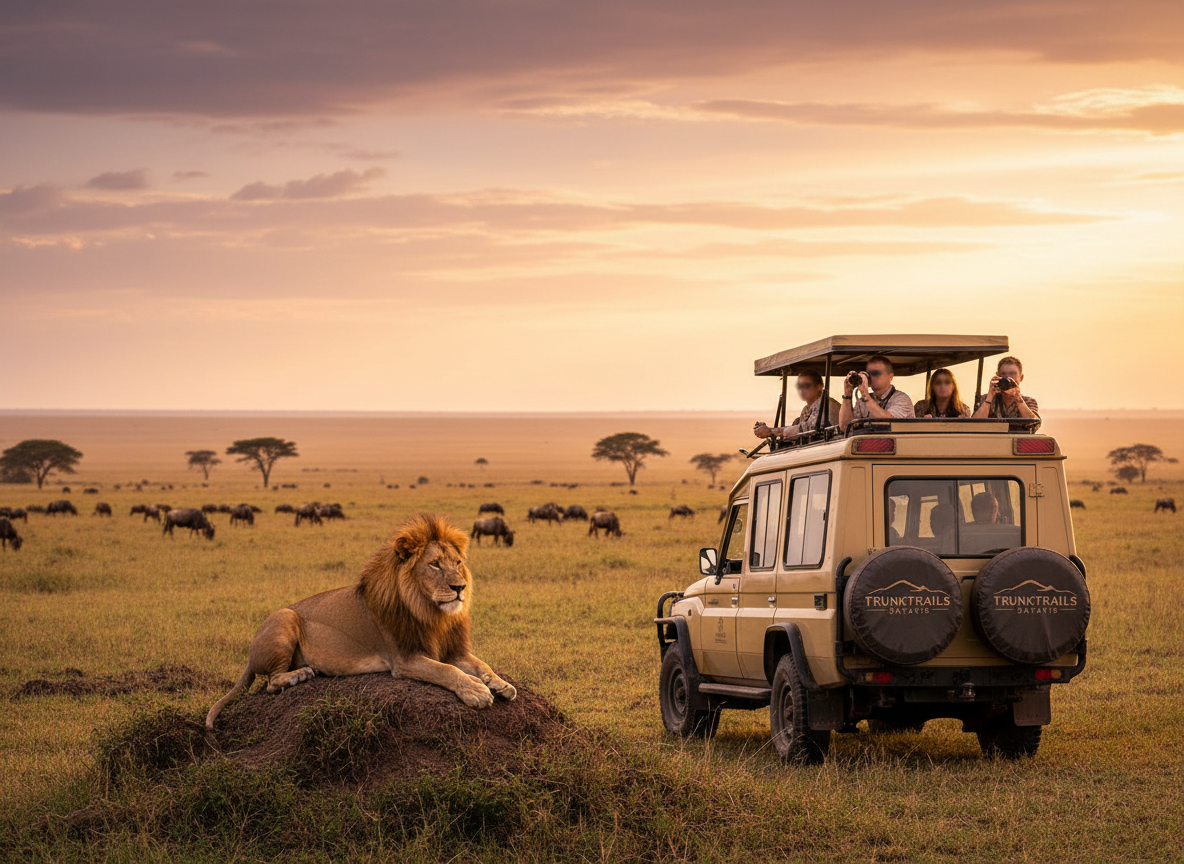
A vehicle safari is conducted in a modified 4WD Land Cruiser or Land Rover fitted with a pop-up roof that allows standing for an unobstructed 360-degree view. Your guide drives the reserve, uses radio communication with other guides to locate wildlife, and narrates sightings as they develop.
The format has a practical logic behind it. From a vehicle, you can:
- Cover 50 to 100 kilometres or more in a single three-to-five-hour drive
- Approach and observe large predators, elephants, and herds safely
- Photograph wildlife from a stable platform at appropriate distances
- Move quickly between sightings across varied terrain
- Stay out in all-weather conditions through rain, dust, and seasonal road changes
The vehicle functions as a neutral object in the ecosystem. Lions, cheetahs, and elephants routinely allow vehicles to within 10 to 20 metres because they have no learned association between a Land Cruiser and threat. This proximity allows wildlife observation and photography that would be impossible on foot.
What a Walking Safari Involves
A walking safari in Kenya is conducted on foot with a trained, armed guide. Groups are kept small, typically two to six guests, and walks run two to three hours, covering three to eight kilometres. Most walks take place in the morning, when animal activity is highest and temperatures are manageable.
In the Masai Mara National Reserve itself, walking safaris are not permitted under reserve regulations. They are available in the private conservancies surrounding the reserve, where different management rules apply. These include Olare Motorogi, Naboisho, Mara North, Ol Kinyei, and several others.
Each walk begins with a briefing: how to move, when to stop, how to respond to wildlife. Wind direction is a constant consideration. The guide reads the ground continuously. Tracks, disturbances in grass, dung, bark, and bird behaviour all carry information. What a walking safari offers is a shift from watching the ecosystem to being inside it.
Wildlife You Encounter on Foot
The question most people have about walking safaris is whether they see large animals. The honest answer is: sometimes, indirectly, and not by design.
Walking safaris are not structured to approach lion, elephant, or buffalo. The guide is trained to detect dangerous animals early and alter the route accordingly. If an unexpected close encounter occurs, the guide manages the situation. This is what the firearm is for. Incidents on properly conducted walks in Kenya are extremely rare.
What walking reveals is the layer of the bush that vehicles pass through without noticing. Dung beetles, animal tracks, insect galleries in dead wood, small reptiles, hornbills, mongoose, and dozens of smaller mammals and birds become the focus. Tracking, which means following elephant or lion prints to establish direction and timing without necessarily closing on the animals, is one of the most skilled and satisfying elements of the experience.
Travelers who have done multiple game drives frequently describe a first walking safari as the moment the bush stopped being scenery and became a functioning system.
Safety on a Walking Safari
The first question almost every first-time walker asks is whether it is safe. It is, when conducted with a trained, certified guide in an area designated for walking activity, and when standard protocols are followed.
Key safety elements include:
- An armed professional guide, typically carrying a .375 or .458 calibre rifle
- Mandatory certification through the Kenya Professional Safari Guides Association
- Small group sizes, which allow quiet movement and easy management
- A pre-walk briefing covering pace, hand signals, when to freeze, and silence requirements
- No walking in conditions with elevated risk from nearby large predators
The alertness a walk demands, listening to every sound, watching the guide’s body language, reading the ground, is more tiring than the physical distance covered. Most guests find the two to three hours genuinely demanding but manageable for anyone in reasonable shape.
Walking Safari vs Vehicle Safari: Key Differences
| Factor | Walking Safari | Vehicle Safari |
|---|---|---|
| Coverage area | 3 to 8 km per walk | 50 to 100+ km per drive |
| Large wildlife sightings | Indirect, tracking-focused | Direct, close approach |
| Small wildlife and tracking | Exceptional | Limited |
| Physical requirement | Moderate fitness | None |
| Sensory immersion | Full: wind, sound, smell, ground | Primarily visual |
| Safety approach | Trained armed guide, route management | Vehicle as protective barrier |
| Duration | 2 to 3 hours | 3 to 5 hours |
| Where available | Private conservancies only | National reserve and conservancies |
| Children | Age 12+ typically | All ages, camp-dependent |
| Cost | Supplement or included at conservancy camps | Standard included game drive |
Where Walking Safaris Are Available in Kenya
The private conservancies adjacent to the Masai Mara National Reserve are the most accessible location for walking safaris from most Kenya itineraries. Olare Motorogi, Naboisho, Mara North, and Ol Kinyei all permit foot safaris, subject to guide availability and conditions on the day.
Other Kenya locations with established walking safari programs:
- Laikipia Plateau: Ol Pejeta Conservancy, Borana Ranch, and Ol Jogi Wildlife Conservancy
- Chyulu Hills: private conservancies near Tsavo West
- Lewa Wildlife Conservancy: northern Laikipia, with rhino and elephant tracking
- Northern Kenya: private conservancies in the Samburu area
Walking in a national park or national reserve is not permitted in Kenya. Confirm that the format is available at your specific camp or conservancy before treating it as guaranteed, since not every property offers it.
Which Format Suits You
A vehicle safari as your primary activity makes sense if you want maximum species coverage across a large area, if predator encounters and river crossings are your priorities, if you are travelling with children under 12, or if this is a first safari and you want the broadest possible wildlife exposure.
Adding a walking safari makes sense if you are staying in a private conservancy where the format is available, if tracking, bush craft, and small wildlife interest you as much as big game, or if you are a returning visitor looking for a different kind of engagement with a landscape you have already driven.
The most practical approach for most itineraries is to combine both. Vehicle game drives as the primary format, with one or two morning walks added through a conservancy camp. The two formats are not in competition. They reveal different things, and together they show you considerably more than either does alone.
Explorer Notes
- Walking safari availability in Kenya’s conservancies varies by property and season. Confirm before finalising your camp selection, particularly for the long rains period in April and May.
- Morning walks are strongly preferred over afternoon walks for both wildlife activity and guide safety assessments.
- Age minimums vary. Most conservancy camps set 12 as the lower limit. Some allow younger children at guide discretion; confirm with the camp directly.
- At some Mara conservancy properties the conservancy fee structure includes walking as part of the daily rate. At others it is a paid supplement. Clarify this before arrival.
- Clothing matters on a walk. Wear neutral colours: khaki, olive, or grey. Avoid white, blue, and bright patterns. Closed shoes with ankle support are better than sandals or trainers.
Conclusion
Walking safari vs vehicle safari is not a straight choice between better and worse. A game drive and a guided walk serve different functions and reward different kinds of attention. Game drives give you the breadth of the ecosystem: the predators, the herds, the open savanna in its full scale. A walking safari gives you the texture: the tracks, the insects, the sounds, and the experience of being a visitor in a place that does not exist for your benefit. For most travellers in Kenya’s private conservancies, the best answer is not to choose between them but to build an itinerary that has room for both.
If this guide has you ready to travel, a safari specialist can handle the route, camps, and logistics end to end.
Want to Book a Tour With Us?